Monk Fruit Sweetener for Diabetes: Benefits, Safety and What the Science says
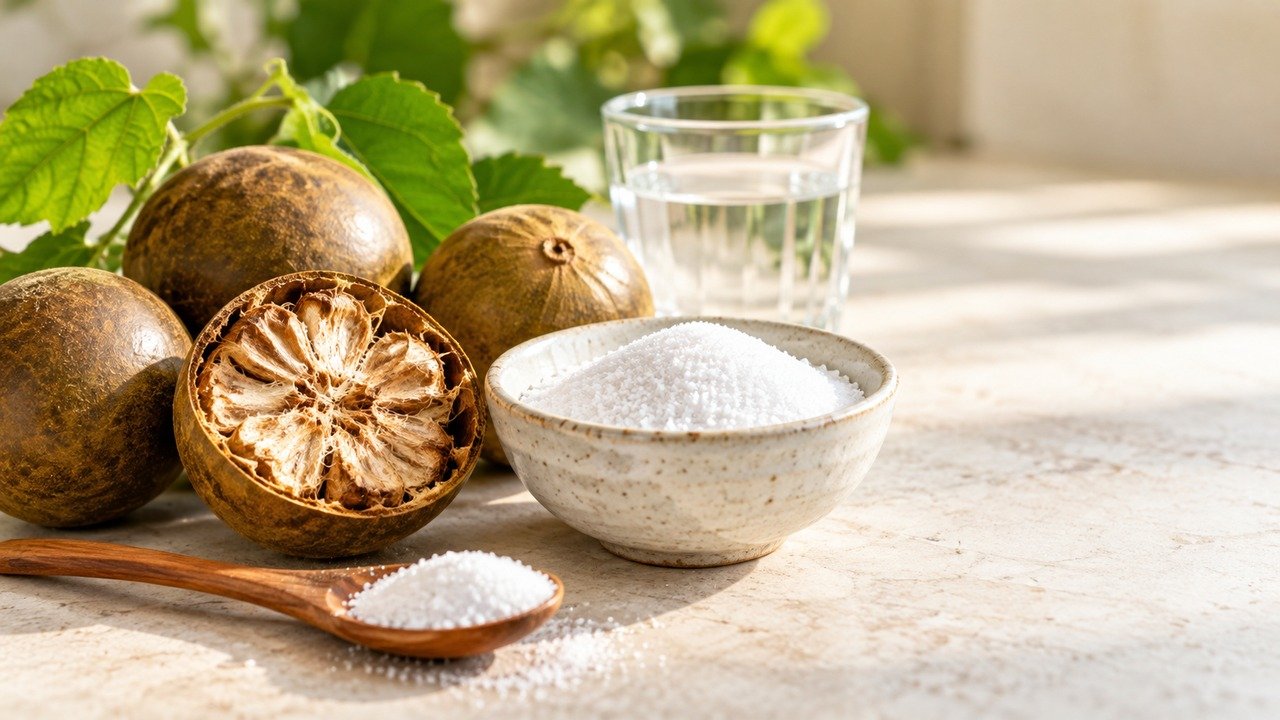
Monk fruit sweetener can be a useful way to replace added sugar in selected foods and drinks, because purified monk fruit extract contributes negligible carbohydrate at usual sweetening quantities. However, it has not been proven to lower HbA1c, reverse diabetes, prevent complications or produce sustained weight loss. Most human studies are small, short-term and conducted in people without diabetes. Commercial blends may contain other ingredients, so the full label matters.
What is monk fruit sweetener?
Monk fruit, also known as Siraitia grosvenorii or luo han guo, is a fruit native to southern China. Its intense sweetness comes mainly from a group of compounds called mogrosides, particularly mogroside V. Depending on the extract and mogroside concentration, monk fruit extract may be approximately 100–250 times sweeter than sucrose.
Because it is intensely sweet, only a small amount of purified extract is needed. Pure monk fruit extract contributes little or no carbohydrate at typical serving quantities. But many tabletop products are blends: they may contain erythritol, dextrose, maltodextrin, inulin or other bulking ingredients. Therefore, “monk fruit sweetener” does not automatically mean that the entire product is carbohydrate-free.
Can people with diabetes use monk fruit?
For an adult with diabetes who currently adds sugar to tea, coffee or a recipe, replacing that sugar with a properly formulated low-carbohydrate monk-fruit product may reduce the carbohydrate and calories contributed by that particular serving.
The likely benefit is from replacing sucrose, not from a proven glucose-lowering drug-like action of monk fruit. Monk fruit does not replace diabetes medication, nutrition therapy, physical activity, glucose monitoring or regular assessment of HbA1c and cardiovascular and kidney risk.
What does human clinical research show?
1. The 2017 randomized crossover study
Tey and colleagues compared beverages sweetened with monk fruit, stevia, aspartame and sucrose in 30 healthy men. The sucrose beverage produced a greater early glucose and insulin response than the non-nutritive sweetened beverages. However, participants ate more at the subsequent meal after the non-nutritive sweetened drinks, and total daily energy intake did not differ significantly. This was a small, short-term study in healthy men—not a diabetes treatment trial.
A separate small study of 10 healthy men used continuous glucose monitoring after beverages sweetened with different sweeteners. It did not demonstrate a meaningful difference in 24-hour glucose profiles. These studies help explain the immediate response to a sweetened drink, but cannot establish a long-term HbA1c or diabetes benefit.
2. The 2025 systematic review
A PRISMA-guided review by Kaim and Labus identified five randomized controlled trials published between 2015 and 2025. The review reported lower post-meal glucose and insulin responses in some comparisons. However, the authors noted that the metabolic studies were predominantly conducted in healthy adults; one study included insulin-sensitive and insulin-resistant participants, while other included trials focused on throat symptoms rather than diabetes outcomes.
Importantly, the review does not establish that monk fruit improves long-term glycaemic control in people with type 2 diabetes. Acute post-meal changes should not be interpreted as evidence of lower HbA1c, reduced medication requirements or fewer complications.
3. The 2026 GREEN randomized trial
A 2026 randomized, double-blind crossover study published in the European Journal of Nutrition assessed three monk-fruit-based formulations in 30 healthy adults. The formulations also contained fructooligosaccharides (FOS). Compared with sucrose, the formulations produced lower glucose and insulin responses after the initial beverage; responses after the subsequent meal were comparable across sweeteners. Overall glucose and insulin exposure was lower in the test sessions, while appetite and energy intake did not differ. Mild adverse events were reported, with diarrhoea occurring more frequently with the monk-fruit formulations.
This is useful newer evidence about specific formulations, but it is still a small, acute study in healthy adults. It does not show that pure monk fruit extract lowers HbA1c or treats diabetes. The presence of FOS also means that the findings should not automatically be applied to every monk-fruit product on the market.
Does monk fruit lower HbA1c?
There is currently no convincing long-duration clinical evidence showing that monk fruit sweetener independently lowers HbA1c in people with type 1 or type 2 diabetes. A lower glucose response after one sweetened drink is not the same as improved average glucose over three months.
If a person reduces added sugar consistently, their overall carbohydrate and calorie intake may improve. Any resulting change in glucose control would be attributable to the broader dietary substitution and lifestyle pattern; it should not be presented as a specific therapeutic effect of mogrosides.
Does monk fruit help with weight loss?
Replacing a sugar-containing drink with a low-calorie alternative can reduce the calories in that drink. But weight change depends on total energy intake over time, appetite, food choices, physical activity, sleep, medications and other factors. The 2017 study did not find a reduction in total daily energy intake after participants compensated at the subsequent meal. The 2026 GREEN trial also found no significant difference in energy intake between test sweeteners.
The World Health Organization's 2023 guideline conditionally recommends against using non-sugar sweeteners as a strategy for long-term weight control or prevention of noncommunicable diseases. The recommendation is not a toxicological safety assessment of each individual sweetener and explicitly does not apply to people with pre-existing diabetes. It supports reducing overall dietary sweetness and improving dietary quality rather than relying on sweeteners as a weight-loss intervention.
Pure monk fruit extract versus commercial monk fruit blends
This distinction is clinically important. A product may advertise monk fruit prominently even though most of its weight comes from a bulking ingredient. Check the ingredient list and nutrition panel for:
- Erythritol: a sugar alcohol often used to provide bulk. Larger quantities may cause bloating, abdominal discomfort or diarrhoea in some people. A 2023 observational study raised cardiovascular questions about circulating erythritol, but it did not prove that eating erythritol causes cardiovascular events. The issue remains under investigation.
- Dextrose: a glucose-based carbohydrate that can raise blood glucose.
- Maltodextrin: a rapidly digestible carbohydrate that may contribute to the glucose load, depending on the amount and serving size.
- Inulin or fructooligosaccharides (FOS): fermentable fibres that may cause gas, bloating or loose stools in sensitive individuals.
- Other sweeteners: some products combine monk fruit with stevia or other sweetening agents.
Do not judge a product only by its front-label claim. Review total carbohydrate per serving, the serving size and all ingredients. The glucose response depends on the complete formulation and what else is eaten with it.
Is monk fruit safe? What do regulators say?
The US Food and Drug Administration (FDA) has evaluated Generally Recognized as Safe (GRAS) notifications for extracts of Siraitia grosvenorii. The FDA states that it has not questioned the notifiers' GRAS conclusions for the specified intended conditions of use. This is not a blanket approval of every product sold in every country, nor does it mean that all commercial formulations have identical composition.
An important new regulatory development occurred in 2026. The Joint FAO/WHO Expert Committee on Food Additives (JECFA) established a temporary acceptable daily intake (ADI) of 0–10 mg/kg body weight per day, expressed as mogroside V. JECFA also noted that a conservative estimate of potential dietary exposure under proposed food-use levels exceeded this temporary ADI by approximately four-fold, raising a potential safety concern for those proposed uses. This is a regulatory exposure assessment, not evidence that ordinary occasional use of a retail tabletop product causes harm. It does mean that safety assessment and permitted use levels remain an evolving area.
ADI values are expressed in mogroside V, not simply grams of tabletop sweetener. The mogroside concentration varies among extracts and products, so consumers should not try to calculate a personal dose from the ADI without knowing the product's composition. Follow local food regulations and product labelling.
What do major diabetes and nutrition guidelines say?
Major diabetes guidelines focus on reducing added sugars, improving overall dietary quality and individualising nutrition therapy. They do not recommend monk fruit as a glucose-lowering treatment.
- WHO 2023 non-sugar sweetener guideline: conditionally advises against relying on non-sugar sweeteners for long-term weight control or prevention of noncommunicable diseases. The recommendation does not apply to people with pre-existing diabetes and is not a safety evaluation of individual sweeteners.
- American Diabetes Association Standards of Care: nutrition therapy should be individualised. Water and unsweetened beverages are preferred; non-nutritive sweeteners may be used in moderation as a replacement for sugar-containing products, rather than as a treatment for diabetes.
- Regulatory assessments: FDA GRAS responses and JECFA evaluations address food-use safety under specified conditions; they do not demonstrate clinical efficacy for diabetes management.
Practical advice for people with diabetes
- If you currently add several teaspoons of sugar to tea or coffee, replacing that sugar with a suitable low-carbohydrate product may reduce the carbohydrate in that drink.
- Read the full ingredient list and nutrition panel. Look for dextrose, maltodextrin, sugar alcohols and added fibres.
- Use the product in the smallest amount needed for taste. Gradually reducing the overall preference for very sweet foods and drinks is a useful long-term goal.
- Prefer water, unsweetened tea or coffee and minimally processed foods most of the time.
- If you use a blended product regularly and notice bloating or diarrhoea, review its erythritol, inulin or FOS content.
- Do not stop or reduce diabetes medication because you have switched to monk fruit.
Frequently asked questions
1. Does monk fruit increase blood sugar?
Purified monk fruit extract is intensely sweet and is used in very small quantities, so it is not expected to produce the same glucose rise as sucrose. However, commercial blends may contain dextrose, maltodextrin or other carbohydrates. Check the full product label.
2. Is monk fruit better than stevia for diabetes?
There is not enough long-term comparative evidence to declare one universally better for people with diabetes. Both may be used as sugar alternatives, but formulation, taste, tolerability and the overall diet matter.
3. Can monk fruit reduce HbA1c?
There is no convincing long-term clinical evidence that monk fruit independently reduces HbA1c. Replacing sugar may reduce carbohydrate intake, but monk fruit is not a glucose-lowering medicine.
4. Can people with type 2 diabetes use monk fruit every day?
A monk-fruit-based food product may fit into an individual's meal plan. Check the ingredients and serving size, and remember that long-term diabetes-specific evidence is limited. If you have gastrointestinal symptoms, check for sugar alcohols or added fibres.
5. Is monk fruit safe for the kidneys?
There is no established clinical evidence that ordinary food-level use of monk fruit extract damages healthy kidneys. However, long-term studies in people with chronic kidney disease are limited. People with kidney disease should review regular use of concentrated supplements or products with their clinician.
6. Does monk fruit cause weight loss?
It can reduce the calories in a particular drink or recipe when it replaces sugar, but it has not been established as a stand-alone weight-loss treatment. Total dietary intake and sustainable lifestyle changes matter more.
7. Can I use monk fruit in tea and coffee?
Yes, if the product fits your dietary needs. Check the label for added carbohydrate ingredients and use only the amount needed for taste.
8. Should I completely replace sugar with monk fruit?
It may be one practical step to reduce added sugar, but the broader goal is to gradually reduce the preference for very sweet foods and drinks. Unsweetened beverages are a good everyday option.
Bottom line
Monk fruit is a possible sugar-replacement tool—not a diabetes treatment. Small human studies suggest that some monk-fruit-sweetened beverages produce a lower immediate glucose response than sucrose. However, the evidence is not sufficient to claim that monk fruit lowers HbA1c, reverses diabetes, prevents complications or causes sustained weight loss. Choose products by their complete ingredient list, not the front-label claim.
References
- Tey SL, Salleh NB, Henry J, Forde CG. Effects of aspartame-, monk fruit-, stevia- and sucrose-sweetened beverages on postprandial glucose, insulin and energy intake. Int J Obes (Lond). 2017;41:450–457. PubMed record.
- Tey SL, et al. Effects of non-nutritive (artificial vs natural) sweeteners on 24-h glucose profiles. Eur J Clin Nutr. 2017. PubMed record.
- Kaim U, Labus K. Monk Fruit Extract and Sustainable Health: A PRISMA-Guided Systematic Review of Randomized Controlled Trials. Nutrients. 2025;17(9):1433. doi:10.3390/nu17091433. PubMed | Full text at PubMed Central.
- Aisara J, et al. Glucose and insulin responses to monk fruit-based sweetener formulations and their effects on appetite, liking and wanting, and energy intake (GREEN): a randomized double-blind, crossover study. Eur J Nutr. 2026. PubMed. Trial registration: TCTR20250512007.
- World Health Organization. Use of non-sugar sweeteners: WHO guideline. Geneva: WHO; 2023. WHO guideline | NCBI Bookshelf.
- Joint FAO/WHO Expert Committee on Food Additives (JECFA). Monk Fruit Extract, INS 970. 2026 evaluation. JECFA database | 102nd meeting summary report.
- US Food and Drug Administration. Aspartame and Other Sweeteners in Food: information on extracts from Siraitia grosvenorii (monk fruit). FDA information.
- American Diabetes Association Professional Practice Committee. Facilitating Positive Health Behaviors and Well-being to Improve Health Outcomes: Standards of Care in Diabetes—2026. Diabetes Care Standards of Care.
Related MedClarity resources
- Diabetes treatment and management in Ghaziabad
- Medical weight management and obesity treatment
- Metformin and vitamin B12 deficiency in diabetes
- CKM syndrome: diabetes, obesity, heart and kidney health
- Fatty liver and metabolic health
- Dr Omkar Singh – physician profile
Medical disclaimer: This article is for general educational purposes and does not replace individual medical advice, diagnosis or treatment. Do not change prescribed diabetes medication without consulting your treating clinician.