Metformin and Vitamin B12 Deficiency: Causes, Symptoms & Monitoring
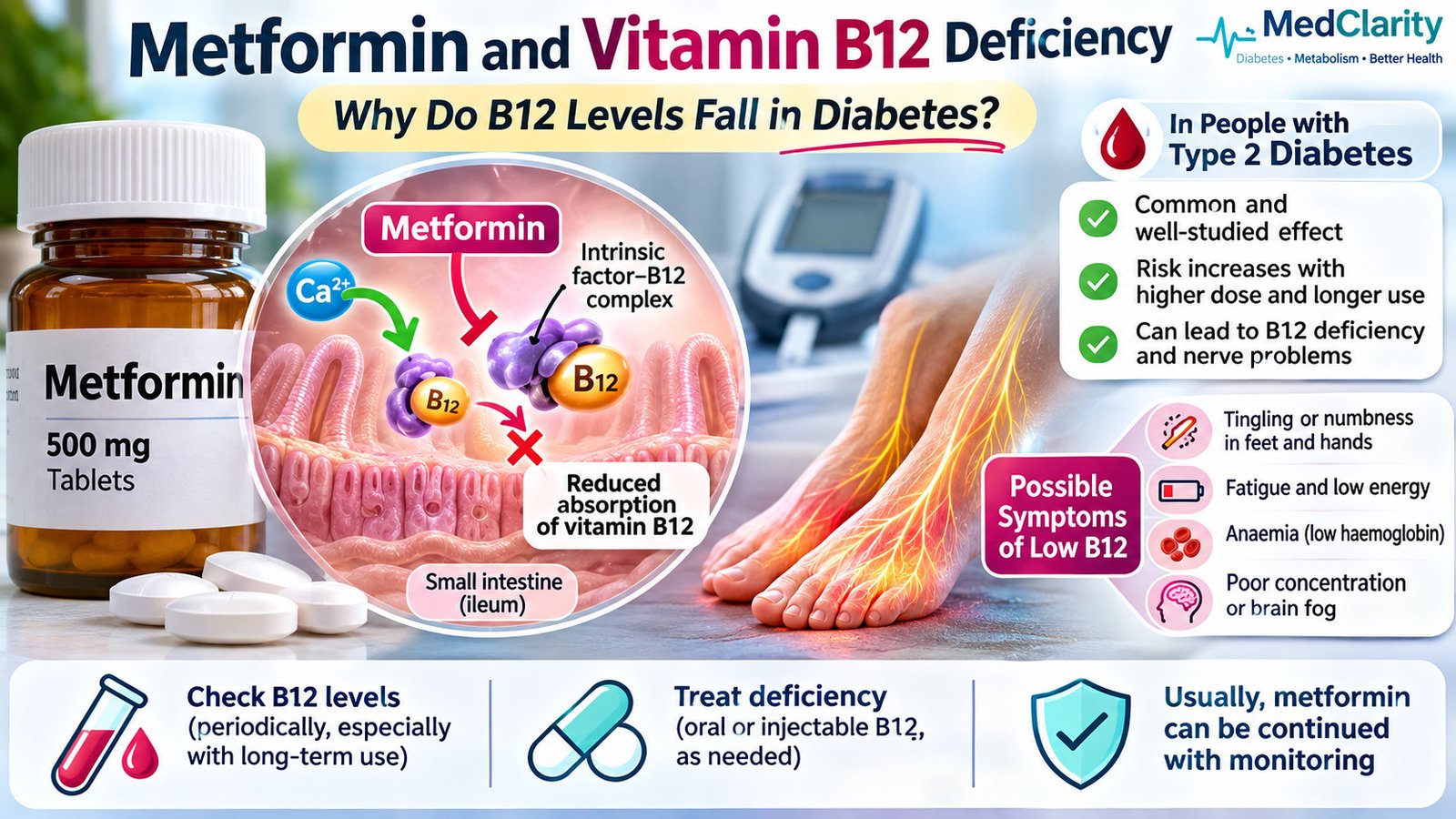
Why should people with diabetes taking metformin pay attention to vitamin B12?
Metformin remains an important treatment for type 2 diabetes because it lowers glucose effectively, is generally weight-neutral or associated with modest weight reduction, and is inexpensive. However, its long-term use is associated with reduced vitamin B12 concentrations in some patients.
This matters because vitamin B12 is essential for normal red blood cell production, DNA synthesis and nervous-system function. Deficiency can cause megaloblastic anaemia, numbness, tingling, loss of vibration sense, gait disturbance, cognitive symptoms and, in severe or prolonged cases, potentially irreversible neurological injury.
In diabetes, the clinical challenge is that B12-deficiency neuropathy can resemble diabetic peripheral neuropathy. A patient may have both conditions. Attributing every sensory symptom to diabetes without considering B12 deficiency can delay a treatable diagnosis.
How does metformin reduce vitamin B12 levels?
Vitamin B12 absorption is a multistep process. Dietary B12 is released from food in the stomach, binds to intrinsic factor produced by gastric parietal cells, and the intrinsic factor–B12 complex travels to the terminal ileum. There, it attaches to specific receptors on intestinal cells and is absorbed into the body.
The most widely accepted explanation for metformin-associated B12 reduction is interference with the calcium-dependent uptake of the intrinsic factor–B12 complex at the ileal receptor (cubilin) level. Metformin appears to alter the calcium-dependent interaction needed for the complex to bind and enter the intestinal cell. This reduces absorption and, over time, may lower circulating B12 stores.
Other proposed mechanisms: what do we know?
- Altered intestinal motility and microbiome: Changes in intestinal transit and bacterial composition have been proposed as contributors, but their importance in clinical B12 deficiency is less firmly established.
- Altered bile-acid handling and enterohepatic circulation: This has been suggested as another possible pathway, but it is not as well established as the ileal absorption mechanism.
- Changes in intrinsic factor or tissue distribution: These have also been proposed, but should be described as hypotheses rather than proven primary mechanisms.
Therefore, patient education should focus on the established association and the leading absorption mechanism without presenting every proposed pathway as settled fact.
Does every person taking metformin develop vitamin B12 deficiency?
No. Metformin does not cause deficiency in every patient. The effect varies between individuals and is influenced by dose, duration of exposure, baseline B12 status, diet, age, gastrointestinal health and other medicines or conditions that affect absorption.
In the randomized, placebo-controlled trial by de Jager and colleagues, metformin treatment was associated with a 19% reduction in B12 concentration over 4.3 years. The absolute risk of biochemical B12 deficiency was 7.2 percentage points higher in the metformin group than in the placebo group. This provides important evidence that the association is not explained only by observational studies.
The Diabetes Prevention Program Outcomes Study also found that low or borderline-low B12 was more common in participants receiving metformin, and the odds of deficiency increased with each year of metformin exposure.
Who is at higher risk of metformin-associated B12 deficiency?
- People taking higher daily doses of metformin, particularly around 1,500–2,000 mg/day or more.
- People taking metformin for several years, especially beyond 4–5 years.
- Older adults.
- People with a vegan or low-animal-food diet, or otherwise low dietary B12 intake.
- People with previous gastric, bariatric or terminal ileal surgery, atrophic gastritis or other malabsorptive disorders.
- People taking proton-pump inhibitors or H2-receptor antagonists for prolonged periods, particularly when other risk factors coexist.
- People with unexplained anaemia, glossitis, paraesthesia, impaired vibration sense, gait imbalance or peripheral neuropathy.
Metformin dose and duration are important risk factors, but they are not the only determinants. A patient with a short duration of treatment may still have B12 deficiency from diet, autoimmune gastritis or another cause.
How does vitamin B12 deficiency present in a patient with diabetes?
Clinical presentation may be haematological, neurological, cognitive or non-specific. Symptoms can develop gradually and may be overlooked when diabetes is already present.
| Clinical domain | Possible features |
|---|---|
| Peripheral nerves | Numbness, tingling, burning sensations, reduced vibration or position sense, sensory ataxia and gait imbalance. |
| Haematological | Megaloblastic anaemia, macrocytosis, fatigue, pallor and sometimes glossitis. |
| Cognitive / neuropsychiatric | Memory difficulty, poor concentration, mood changes or confusion, particularly in more advanced deficiency. |
| Other | Sore tongue, reduced appetite and generalised weakness. |
Metformin-associated B12 deficiency or diabetic neuropathy?
The two conditions are not mutually exclusive. Diabetes itself is a common cause of peripheral neuropathy, while B12 deficiency is a potentially treatable contributor that should be considered, especially in people receiving long-term metformin.
Features such as prominent loss of vibration or position sense, sensory ataxia, macrocytosis, glossitis or a low B12 result may increase suspicion, but no single symptom reliably distinguishes the two. Clinical examination and appropriate laboratory assessment are needed.
When should vitamin B12 be tested in a person taking metformin?
Testing is particularly appropriate when a patient taking metformin develops peripheral neuropathy, anaemia, macrocytosis, glossitis, unexplained fatigue or other symptoms suggestive of B12 deficiency. It is also reasonable to consider periodic assessment in people receiving long-term metformin, especially when dose, duration or additional risk factors increase concern.
The American Diabetes Association (ADA) Standards of Care in Diabetes—2026 recommend considering periodic assessment of vitamin B12 in people receiving long-term metformin, especially those with anaemia or peripheral neuropathy. The 2026 comprehensive evaluation guidance specifically lists B12 assessment in people taking metformin for more than five years. The ADA pharmacologic guidance also highlights higher doses (for example, 1,500 mg/day or more), longer duration (around 4–5 years) and other risk factors as reasons for closer attention; annual monitoring is advised in those taking metformin for more than four years or with additional B12 risk factors.
The UK Medicines and Healthcare products Regulatory Agency (MHRA) considers reduced B12 levels a common adverse effect of metformin and advises testing when symptoms suggest deficiency, with periodic monitoring considered in patients with risk factors. The RSSDI 2022 recommendations reproduce advice to monitor B12 periodically, particularly when anaemia or peripheral neuropathy is present.
Which tests should be ordered?
- Serum total vitamin B12: A common first-line test. Interpret using the reporting laboratory's reference range and the clinical picture.
- Complete blood count (CBC) and mean corpuscular volume (MCV): Helpful for detecting macrocytosis or anaemia, but normal results do not rule out neurological B12 deficiency.
- Methylmalonic acid (MMA): Consider when serum B12 is borderline or indeterminate and clinical suspicion remains. Renal impairment can raise MMA and complicate interpretation.
- Homocysteine: May support the assessment in selected cases, but is less specific because folate deficiency and other factors can also increase it.
- Additional tests: Folate, renal function, thyroid testing or evaluation for autoimmune gastritis and malabsorption may be appropriate depending on the presentation.
Vitamin B12 thresholds vary between laboratories and assays. NICE guideline NG239 uses total B12 below 180 ng/L (133 pmol/L) as confirming deficiency, 180–350 ng/L (133–258 pmol/L) as an indeterminate range, and above 350 ng/L (258 pmol/L) as making deficiency less likely. These are guideline thresholds, not universal substitutes for local laboratory ranges or clinical judgement.
How should metformin-associated B12 deficiency be managed?
When deficiency is confirmed or strongly suspected, vitamin B12 should be replaced according to the severity of deficiency, neurological involvement, likely cause, absorption status and local treatment guidance. Oral high-dose B12 may be suitable for many patients, while intramuscular replacement is generally considered when there are significant neurological or haematological manifestations, severe deficiency, malabsorption, adherence concerns or a need for rapid and reliable replacement.
The choice between oral and injectable treatment should be individualised. For a detailed discussion of methylcobalamin versus cyanocobalamin, oral versus injectable preparations and evidence-based selection, see our related guide: Methylcobalamin vs cyanocobalamin: which vitamin B12 preparation should be used?
Metformin usually does not need to be stopped solely because B12 deficiency has developed. In many patients, the benefits of continued glucose-lowering treatment can be preserved while B12 deficiency is corrected and monitored. Review the indication, dose, other risk factors and patient preference before making changes.
Can vitamin B12 deficiency be prevented while continuing metformin?
Risk can be reduced by identifying susceptible patients, reviewing dietary intake and gastrointestinal risk factors, testing when indicated and treating deficiency early. Patients should not stop metformin or begin supplements or injections without discussing the plan with their treating clinician.
- Use the lowest effective metformin dose that achieves the agreed clinical goal, without compromising diabetes control.
- Review B12 risk factors at routine diabetes follow-up, particularly after several years of treatment.
- Test promptly if neuropathy, anaemia, macrocytosis or other suggestive symptoms develop.
- Consider periodic or annual monitoring in people with prolonged exposure or additional risk factors, consistent with current guidance and clinical judgement.
- Correct confirmed deficiency and continue follow-up when the underlying risk factor persists.
What do the major guidelines say?
| Guideline / regulator | Key advice relevant to metformin and B12 |
|---|---|
| ADA Standards of Care 2026 | Consider periodic B12 assessment during long-term metformin therapy, particularly with anaemia or peripheral neuropathy. The comprehensive assessment table lists testing in people taking metformin for more than five years; the pharmacologic section highlights higher dose, longer duration and other risk factors. |
| RSSDI Clinical Practice Recommendations 2022 | Reproduces advice to monitor vitamin B12 periodically in metformin users, especially when anaemia or peripheral neuropathy is present. |
| MHRA Drug Safety Update 2022 | Recognises reduced B12 as a common metformin adverse effect; recommends testing when symptoms suggest deficiency and considering periodic monitoring in patients with risk factors. |
| NICE NG239 (2024) | Includes metformin among medicines associated with B12 deficiency, provides diagnostic thresholds and advises considering replacement while awaiting results in suspected medicine-induced deficiency. |
Clinical bottom line
Metformin-associated vitamin B12 reduction is a recognised, dose- and duration-related adverse effect. The leading mechanism is impaired calcium-dependent absorption of the intrinsic factor–B12 complex in the terminal ileum. The clinical consequence is important in diabetes because B12 deficiency can cause neuropathy and may be missed when symptoms are attributed entirely to diabetic nerve damage.
For clinicians, the practical message is straightforward: consider B12 in long-term metformin users, test when symptoms or risk factors are present, do not rely on CBC alone, and correct deficiency without automatically discontinuing metformin.
Frequently asked questions
1. Does metformin cause vitamin B12 deficiency?
Metformin can reduce vitamin B12 absorption and lower serum B12 levels, particularly with higher doses and longer treatment duration. Not every person taking metformin develops deficiency, but long-term users and those with additional risk factors deserve attention.
2. How many years of metformin use can cause B12 deficiency?
There is no fixed duration at which every patient develops deficiency. Risk can increase over time, and studies have reported lower B12 levels after several years of treatment. The ADA highlights longer exposure, around 4–5 years, as a risk factor and recommends periodic assessment in long-term users.
3. What is the mechanism of metformin-induced B12 deficiency?
The most widely accepted mechanism is interference with calcium-dependent binding and uptake of the intrinsic factor–vitamin B12 complex at receptors in the terminal ileum. This reduces intestinal absorption of B12.
4. Can metformin-related B12 deficiency cause diabetic neuropathy?
B12 deficiency can cause peripheral and sometimes spinal-cord-related neurological damage. In a person with diabetes, it may mimic or worsen neuropathy and can coexist with diabetic peripheral neuropathy. New or worsening neuropathy in a metformin user should prompt consideration of B12 deficiency.
5. Should everyone taking metformin have an annual B12 test?
Guidelines support periodic assessment in long-term users and closer monitoring when risk factors, anaemia or neuropathy are present. The ADA 2026 guidance highlights annual monitoring for people taking metformin for more than four years or who have other B12 risk factors. The exact interval should be individualised.
6. Should metformin be stopped if vitamin B12 is low?
Not usually. In many patients, metformin can be continued while B12 deficiency is treated. The clinician should review the reason for metformin, dose, severity of deficiency, symptoms and other risk factors before changing therapy.
7. Is oral vitamin B12 enough, or are injections necessary?
Oral high-dose B12 is appropriate for many patients, while injections may be preferred in severe deficiency, significant neurological involvement, malabsorption or when reliable absorption and adherence are concerns. The route and regimen should be selected according to clinical assessment and local guidance.
8. Does a normal haemoglobin rule out vitamin B12 deficiency?
No. Neurological B12 deficiency can occur without anaemia or macrocytosis. A normal CBC should not prevent B12 testing when symptoms or risk factors are present.
9. Can calcium tablets prevent metformin-related B12 deficiency?
One small study suggested that calcium could reverse a measured effect of metformin on B12 absorption, but this is not sufficient evidence to recommend routine calcium supplementation. Confirmed B12 deficiency should be treated with vitamin B12 replacement.
Related MedClarity reading
- Methylcobalamin vs cyanocobalamin: oral tablets, injections and clinical selection
- Diabetes treatment and comprehensive diabetes care in Ghaziabad
- Obesity and medical weight management in Ghaziabad
- Thyroid disorders: symptoms, TSH and treatment
- Dr. Omkar Singh – Consultant Physician, Ghaziabad
References and guidelines
- de Jager J, Kooy A, Lehert P, et al. Long term treatment with metformin in patients with type 2 diabetes and risk of vitamin B-12 deficiency: randomised placebo controlled trial. BMJ. 2010;340:c2181. PubMed · doi:10.1136/bmj.c2181.
- Aroda VR, et al. Long-term Metformin Use and Vitamin B12 Deficiency in the Diabetes Prevention Program Outcomes Study. J Clin Endocrinol Metab. 2016;101(4):1754–1761. PubMed · Free full text.
- Bauman WA, Shaw S, Jayatilleke E, et al. Increased intake of calcium reverses vitamin B12 malabsorption induced by metformin. Diabetes Care. 2000;23(9):1227–1231. PubMed.
- Chapman LE, Darling AL, Brown JE. Association between metformin and vitamin B12 deficiency in patients with type 2 diabetes: a systematic review and meta-analysis. Diabetes Metab. 2016. PubMed.
- Yang W, et al. Associations between metformin use and vitamin B12 levels, anemia, and neuropathy in patients with diabetes: a meta-analysis. 2019. PubMed.
- Alzoubi KH, et al. Vitamin B12 deficiency in diabetic patients treated with metformin: a narrative review. 2024. PubMed · Free full text.
- American Diabetes Association Professional Practice Committee. 3. Prevention or Delay of Diabetes and Associated Comorbidities: Standards of Care in Diabetes—2026. Diabetes Care. 2026. ADA guideline.
- American Diabetes Association Professional Practice Committee. 4. Comprehensive Medical Evaluation and Assessment of Comorbidities: Standards of Care in Diabetes—2026. Diabetes Care. 2026. ADA guideline.
- Research Society for the Study of Diabetes in India (RSSDI). RSSDI Clinical Practice Recommendations for the Management of Type 2 Diabetes Mellitus 2022. Int J Diabetes Dev Ctries. 2022;42(Suppl 1). Full guideline PDF.
- Medicines and Healthcare products Regulatory Agency (MHRA). Metformin and reduced vitamin B12 levels: new advice for monitoring patients at risk. 20 June 2022. Drug Safety Update.
- National Institute for Health and Care Excellence (NICE). Vitamin B12 deficiency in over 16s: diagnosis and management. NICE guideline NG239, 2024. Guideline.
Medical information notice: This article is for educational purposes and does not replace individual medical assessment. Do not stop metformin or start vitamin B12 supplements or injections solely on the basis of this article. Testing, diagnosis, treatment route and follow-up should be individualised by the treating clinician.