Sarcopenia in Older Adults: Signs of Muscle Loss, Diagnosis and How to Prevent It
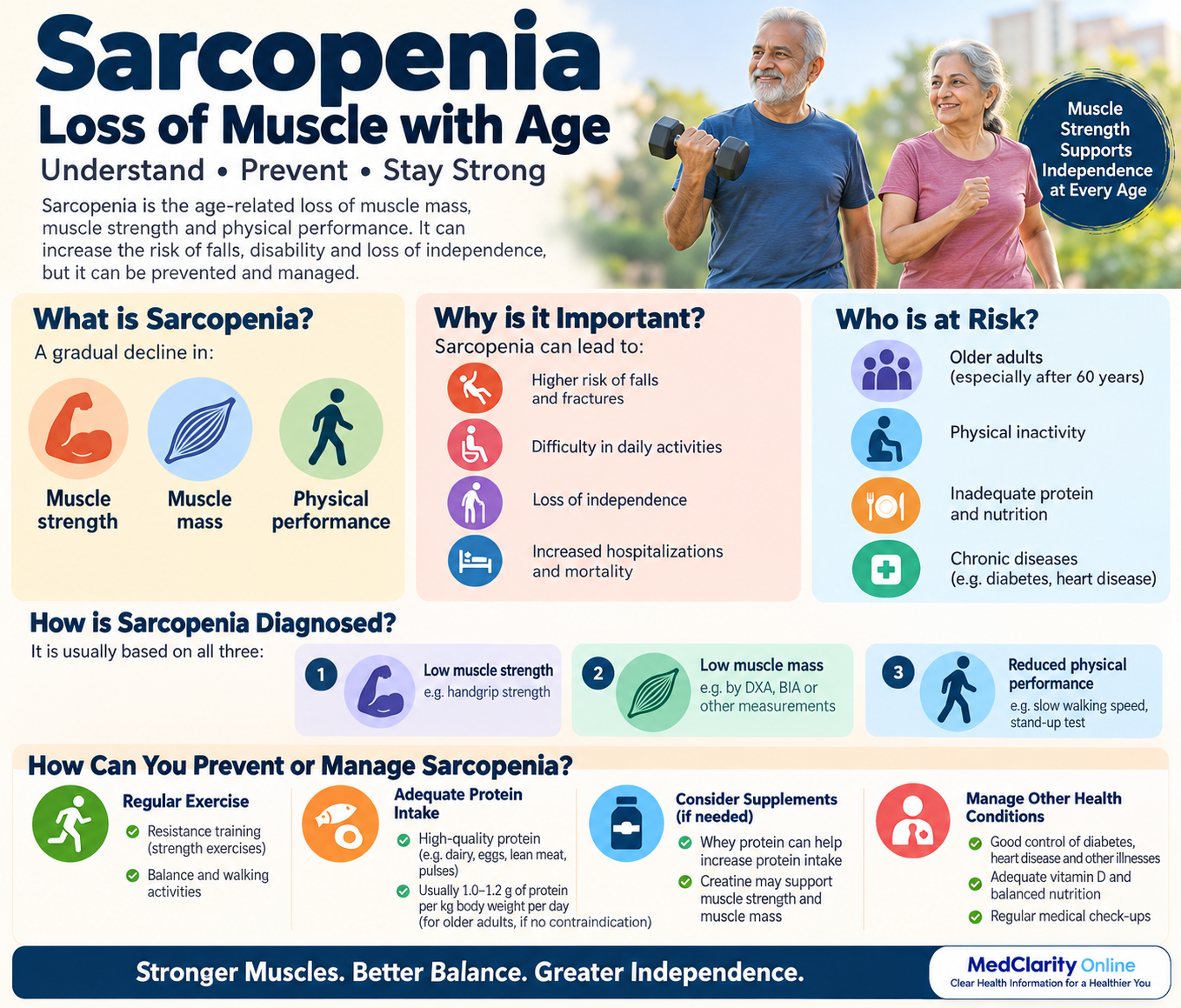
Do you find it harder to get up from a chair, climb stairs, carry shopping bags or walk as far as you used to? These changes are often attributed to ageing, but sometimes they indicate a condition called sarcopenia—the progressive loss of skeletal muscle strength and muscle mass, accompanied by deterioration in physical function.
Sarcopenia is more than a cosmetic change in the body. It can contribute to falls, fractures, difficulty performing everyday activities, loss of independence and hospitalization. The encouraging news is that early recognition, appropriate strength training and individualized nutrition can help preserve muscle function.
This article explains what sarcopenia is, who may be at risk, how doctors assess it, and what older adults and their families can do to support healthier ageing.
What is sarcopenia?
Sarcopenia is a muscle disorder associated with declining muscle strength and muscle quantity or quality. Physical performance—such as walking speed, balance and the ability to stand up from a chair—is also important when evaluating its impact and severity.
Although it is more common with advancing age, sarcopenia should not be dismissed as an inevitable or untreatable part of getting older. It may coexist with frailty, malnutrition, diabetes, cardiovascular disease and other chronic conditions.
Remember: A person can have a normal body weight or even excess body fat and still have poor muscle strength. Body weight alone cannot tell you whether your muscles are healthy.
What are the early signs of sarcopenia?
Early symptoms can be subtle. Families may notice changes before an older adult recognizes that their muscle function has declined.
These symptoms do not prove that someone has sarcopenia. Arthritis, neurological disorders, heart or lung disease, anemia, medication effects and other conditions can produce similar difficulties. A clinical assessment can help identify the cause.
Who is at risk of sarcopenia?
Ageing is an important risk factor, but several other factors can contribute to muscle loss and weakness.
Sarcopenia and frailty frequently coexist, but they are not identical. A clinician may assess both because their combination can increase the risk of disability and other adverse outcomes.
Why does muscle loss occur with ageing?
Muscle health depends on a balance between muscle protein synthesis, muscle protein breakdown, nerve function, hormones, physical activity and nutrition. Ageing can affect several of these processes simultaneously.
1. Reduced muscle-building response
Older muscles may respond less strongly to dietary amino acids and exercise. This phenomenon is often called anabolic resistance. Adequate nutrition and a suitable exercise stimulus therefore become particularly important.
2. Changes in nerves and muscle fibres
Age-related changes in motor neurons and the connections between nerves and muscles can contribute to weakness and loss of muscle function.
3. Chronic inflammation and illness
Persistent inflammation and chronic disease can promote muscle breakdown, inactivity and reduced recovery.
4. Poor appetite and inadequate nutrition
Some older adults eat less because of dental problems, swallowing difficulties, illness, medication effects, isolation or reduced appetite. When energy and protein intake remain inadequate, maintaining muscle becomes more difficult.
How is sarcopenia diagnosed?
Sarcopenia cannot be reliably diagnosed by looking at body shape or checking body weight alone. Assessment may involve several complementary steps.
Step 1: Screening and clinical history
A clinician may ask about falls, difficulty walking, problems standing from a chair, recent weight loss, nutrition and physical activity. Tools such as the SARC-F questionnaire can help identify people who may need further evaluation. A screening questionnaire is not a definitive diagnosis.
Step 2: Measure muscle strength
Handgrip strength is commonly assessed using a dynamometer. The five-times sit-to-stand test may also help evaluate lower-limb strength and function. Results need to be interpreted in the context of the person's age, health and the assessment method.
Step 3: Assess muscle quantity or quality
When indicated, muscle quantity can be evaluated using techniques such as dual-energy X-ray absorptiometry (DXA) or bioelectrical impedance analysis (BIA). Other methods, including CT, MRI and ultrasound, may be used in selected clinical or research settings. Availability and limitations vary by method.
Step 4: Evaluate physical performance
Walking speed, balance, the Timed Up and Go test or the Short Physical Performance Battery may help assess how muscle impairment affects everyday function and disease severity.
Diagnostic frameworks differ in how they combine strength, muscle quantity and physical performance. Under the widely used EWGSOP2 framework, low muscle strength indicates probable sarcopenia; reduced muscle quantity or quality is used to confirm the diagnosis, while physical performance helps assess severity.
A clinician may also investigate potentially reversible contributors, including malnutrition, medication effects, endocrine disorders, neurological problems and other chronic illnesses.
How can sarcopenia be prevented or managed?
The central approach is a combination of appropriate exercise, adequate nutrition and management of underlying health conditions. The programme should be tailored to the person's strength, mobility, medical history and risk of falling.
1. Make resistance exercise a priority
Resistance exercise provides a stimulus for muscles to become stronger. Depending on the individual's ability, activities may include:
Guidance for older adults commonly includes resistance training two to three times per week, adjusted to ability and recovery. Beginners, people with significant weakness and those with balance problems should start at an appropriate level and may benefit from supervision by a qualified exercise professional or physiotherapist.
Walking and balance exercises can support mobility and general health, but walking alone may not provide enough resistance to build strength in all muscle groups.
2. Eat enough protein and energy
Protein supplies amino acids needed to maintain and repair muscle. Inadequate total food intake can limit the benefit of both protein and exercise.
The 2019 ESPEN guideline on clinical nutrition and hydration in geriatrics recommends at least 1.0 g of protein per kilogram of body weight per day for healthy older adults, with individual needs often higher during illness or in people with malnutrition risk. The appropriate target depends on the person's clinical condition, diet, activity and kidney health.
Protein-containing foods can include:
Whey protein may be a convenient option when a person struggles to meet their protein needs through food. It is not compulsory for everyone, and supplements should complement rather than replace a balanced diet.
People with chronic kidney disease or other conditions requiring dietary modification should discuss their protein intake with their treating clinician or dietitian rather than adopting a high-protein diet independently.
3. Avoid unintentional muscle loss during weight reduction
Weight management should aim to reduce excess fat while preserving as much muscle as possible. Severe calorie restriction, inadequate protein and inactivity can increase the risk of losing lean tissue.
For older adults with obesity, a supervised plan combining appropriate nutrition and resistance exercise may be preferable to focusing on weight loss alone. Unintentional weight loss or a persistent decline in appetite deserves medical evaluation.
4. Correct nutritional deficiencies when present
Vitamin D is important for bone and muscle health, but supplementation alone has not consistently been shown to reverse sarcopenia. Vitamin D supplementation is most appropriately guided by clinical context and the need to prevent or treat deficiency.
Other nutritional deficiencies should be investigated and corrected when indicated. Taking multiple supplements without identifying a need is not a substitute for exercise, adequate food intake and clinical assessment.
5. Manage chronic medical conditions
Diabetes, cardiovascular disease, neurological conditions, joint disorders and other illnesses may affect muscle health through several pathways. Good clinical care, appropriate physical activity, adequate nutrition and medication review can form part of an individualized plan.
Medicines or experimental therapies intended to increase muscle mass should not be assumed to improve strength or everyday function. Pharmacological approaches to sarcopenia remain limited, and emerging treatments require further evidence before routine use.
Can supplements alone reverse sarcopenia?
No supplement should be regarded as a stand-alone treatment for sarcopenia. Protein supplements may help people who cannot meet their requirements through food, while specific supplements may be appropriate in selected circumstances.
However, the central evidence-based strategy remains multimodal: resistance exercise, adequate energy and protein intake, and individualized management of medical conditions. An increase in muscle mass does not automatically mean better strength, balance or walking ability.
Creatine and whey protein will be discussed separately in our related educational articles. Their potential role should be considered in the context of the person's goals, health conditions and overall programme rather than as a replacement for resistance exercise.
When should you seek medical advice?
Arrange a medical assessment if you or an older family member develops progressive weakness, repeated falls, difficulty standing or walking, unexplained weight loss, persistent poor appetite or a noticeable decline in everyday activities.
Seek urgent assessment for sudden weakness, new inability to walk, a sudden neurological change or a serious injury after a fall. These symptoms should not be assumed to be ordinary age-related muscle loss.
Frequently asked questions about sarcopenia
Is sarcopenia the same as normal ageing?
No. Some decline in muscle function can occur with age, but sarcopenia is a clinically important muscle disorder associated with weakness and reduced muscle quantity or quality. It deserves assessment when suspected.
Can sarcopenia be reversed?
Muscle strength and function can improve with appropriate resistance exercise and nutritional support. The degree of improvement varies according to the person's health, severity of muscle impairment, adherence and other factors. Complete reversal cannot be guaranteed.
Is walking enough to prevent sarcopenia?
Walking supports cardiovascular health and mobility, but resistance exercise is especially important for developing and maintaining muscle strength. A balanced programme may include resistance, walking and balance activities.
How much protein does an older adult need?
Protein needs vary. ESPEN guidance recommends at least 1.0 g/kg/day for healthy older adults, with higher needs often considered during illness or malnutrition risk. Kidney disease and other clinical factors may require an individualized plan.
Does everyone with sarcopenia need whey protein?
No. Many people can meet their needs through food. Whey protein may be convenient when dietary intake is insufficient, but its use should fit the person's overall nutrition plan and medical circumstances.
Can sarcopenia occur in someone who is overweight?
Yes. Body weight and body fat do not reliably indicate muscle strength or quality. A person may have excess body fat alongside low muscle strength or muscle mass.
Key takeaways
References
Related MedClarity resources
Medical disclaimer: This article is for general education and does not replace an individual medical consultation. Exercise, nutrition targets and supplements should be tailored to individual health needs. Seek professional advice if you suspect sarcopenia or experience progressive weakness, falls or unexplained weight loss.