Can Fatty Liver Be Reversed? A Practical Guide to MASLD, Diet and Fibrosis
LIVER HEALTH · METABOLIC HEALTH
Can Fatty Liver Be Reversed? A Practical Guide to MASLD, Diet and Fibrosis
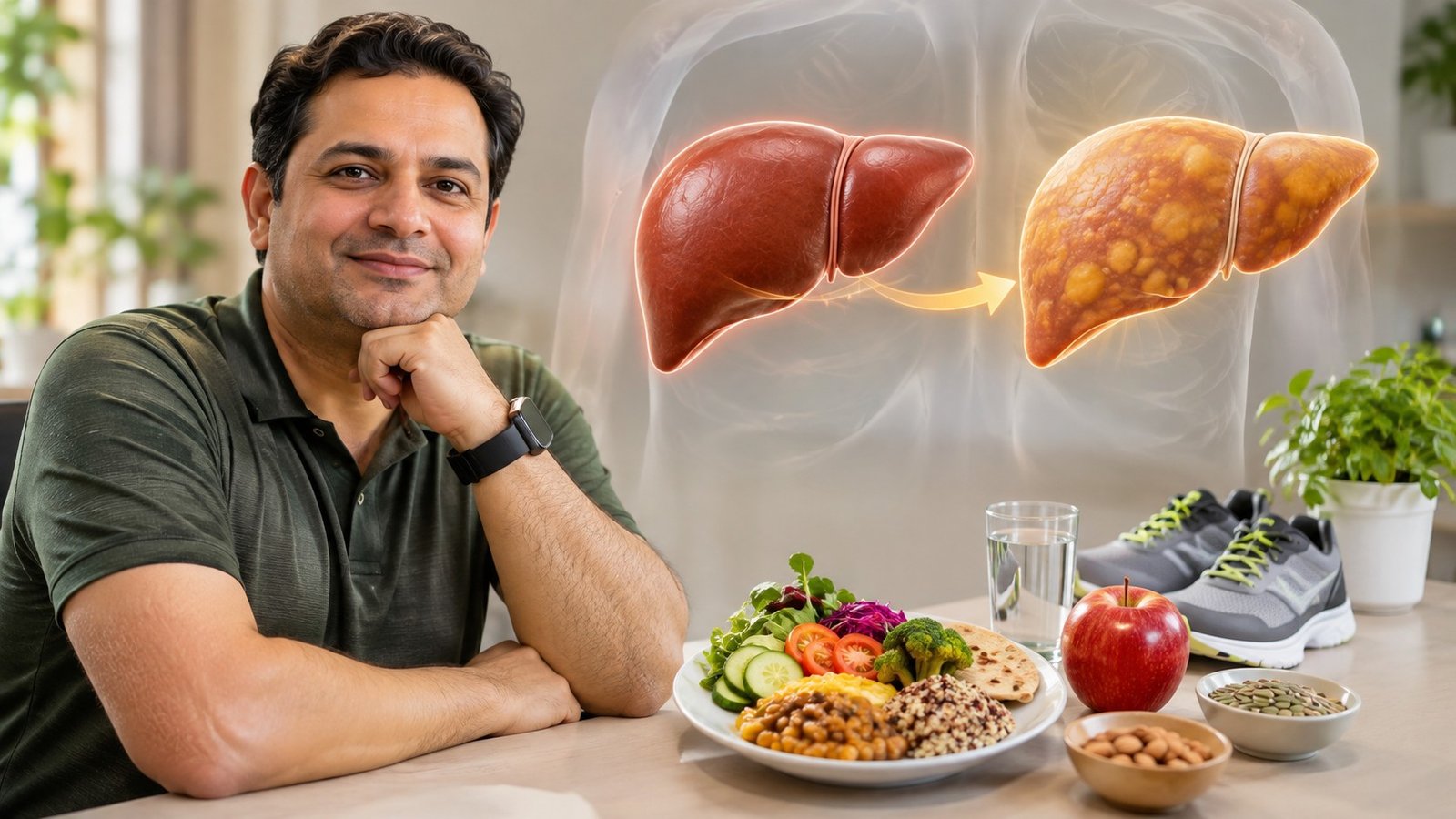
A fatty liver report can be worrying—but it does not automatically mean permanent liver damage. Understand what causes fatty liver, which tests matter, and what actually helps reduce liver fat and the risk of fibrosisFatty liver is closely linked to metabolic health. Sustainable lifestyle changes can reduce liver fat and improve overall health.
Yes—fatty liver can often improve, and liver fat may reduce substantially when the underlying metabolic drivers are addressed. In some people, inflammation and early fibrosis can also improve. However, the result depends on the stage of disease, the cause, and how consistently risk factors are managed. Advanced scarring (cirrhosis) may not fully reverse.
What is fatty liver? Why is it now called MASLD?
Fatty liver means excess fat has accumulated inside liver cells. The newer term metabolic dysfunction-associated steatotic liver disease (MASLD) is used when liver fat is present along with at least one cardiometabolic risk factor, such as excess weight around the waist, high blood glucose, high blood pressure, high triglycerides or low HDL cholesterol.
The older term NAFLD (non-alcoholic fatty liver disease) is being replaced by MASLD. The term MASH (metabolic dysfunction-associated steatohepatitis) describes the form in which fat is accompanied by liver-cell injury and inflammation. MASH was previously called NASH.
How does fatty liver progress?
MASLD is a spectrum. Many people have simple steatosis and never develop advanced liver disease. In some, ongoing metabolic stress leads to inflammation and fibrosis. Fibrosis can progress to cirrhosis, which increases the risk of liver failure and liver cancer.
- Steatosis: excess fat in liver cells.
- MASH: fat with inflammation and liver-cell injury.
- Fibrosis: scar tissue develops as the liver responds to ongoing injury.
- Cirrhosis: advanced, widespread scarring that can impair liver function.
Not everyone moves through these stages, and progression is not inevitable. Identifying people at higher risk of fibrosis is more useful than simply repeating an ultrasound to track the grade of fat.
Who is more likely to develop fatty liver?
- People with type 2 diabetes or prediabetes
- People with abdominal obesity or excess body weight
- People with high triglycerides, low HDL cholesterol or other lipid abnormalities
- People with high blood pressure or metabolic syndrome
- People with sedentary lifestyles and diets high in sugary drinks and refined foods
- People with obstructive sleep apnoea or a family history of advanced fatty liver disease
Fatty liver can also occur in people who are not visibly overweight. A normal body weight does not rule out MASLD, particularly when abdominal fat or insulin resistance is present.
Does fatty liver cause symptoms?
Most people with fatty liver have no specific symptoms. It is often discovered incidentally during an ultrasound or blood test. Some people report tiredness or vague discomfort in the upper-right abdomen, but these symptoms are not specific and do not indicate the stage of liver disease.
Yellow eyes, abdominal swelling, vomiting blood, black stools, new confusion or marked drowsiness need urgent medical assessment. These can indicate serious liver or gastrointestinal complications and should not be attributed to uncomplicated fatty liver.
Which tests are useful when an ultrasound shows fatty liver?
An ultrasound can identify steatosis, but it cannot reliably determine whether significant fibrosis is present. A sensible assessment looks at metabolic risk, liver enzymes, platelet count and—when appropriate—non-invasive fibrosis tests.
1. Blood tests and metabolic assessment
- Liver enzymes: ALT, AST, and other liver-function tests as clinically indicated
- Complete blood count, especially platelet count
- Fasting glucose and/or HbA1c
- Lipid profile
- Blood pressure, BMI and waist circumference
- Assessment of alcohol intake, medicines and other possible causes of liver disease
Normal ALT and AST do not reliably exclude significant fibrosis. Persistently abnormal enzymes should prompt evaluation for MASLD and other possible causes, such as viral hepatitis, medication-related injury, autoimmune liver disease or iron overload, depending on the clinical context.
2. FIB-4: a first-step fibrosis risk score
FIB-4 uses age, AST, ALT and platelet count to estimate the likelihood of advanced liver fibrosis. It is a risk-stratification tool—not a direct measurement of liver fat and not a diagnosis of cirrhosis.
- Below 1.3: generally lower risk of advanced fibrosis in many adults.
- 1.3 or above: usually warrants a second-step assessment, often FibroScan/VCTE or another validated test.
- Above 2.67: raises concern for advanced fibrosis and generally supports specialist evaluation.
For adults aged 65 years and older, a higher lower-risk threshold (around 2.0) is commonly used. FIB-4 is less accurate below age 35 and should not be interpreted in isolation, during acute illness, or without considering the clinical picture.
3. FibroScan / transient elastography
FibroScan can provide a liver-stiffness measurement (LSM), which helps assess fibrosis risk, and a controlled attenuation parameter (CAP), which estimates steatosis. It is useful as a second-step test when FIB-4 is not low or when clinical risk remains concerning. Results must be interpreted with the device, fasting status, body habitus and clinical context in mind.
A liver biopsy is not needed for most people with uncomplicated MASLD. It may be considered by a specialist when non-invasive tests are inconclusive, another liver disease is suspected, or a definitive diagnosis would change treatment.
Can fatty liver be reversed? What amount of weight loss helps?
Weight reduction is one of the most effective interventions for people with MASLD who have excess weight. The benefit is generally dose-related:
- About 3–5% weight loss: can reduce liver fat in many people.
- About 7–10%: is more likely to improve liver inflammation (MASH) in people who have it.
- 10% or more: may improve fibrosis in some people, although response varies and is not guaranteed.
These are approximate targets from clinical evidence, not a promise that a particular percentage will reverse disease in every person. Avoid crash diets and rapid, unsupervised weight loss. A sustainable plan is safer and more likely to last.
5 practical changes for an Indian diet
1. Stop sugary drinks first
Reduce or avoid soft drinks, packaged fruit drinks, sweetened tea or coffee, energy drinks and frequent sugar-loaded beverages. Prefer water, unsweetened drinks or plain chaas without added sugar. Whole fruit is generally a better choice than fruit juice.
2. Improve the plate rather than following a “liver detox” diet
Build meals around vegetables, dal/beans, curd or another suitable protein source, and sensible portions of roti, rice or other whole grains. Choose less deep-fried food, bakery products, refined snacks and highly processed foods. No single food, seed, juice or herbal preparation has been proven to cleanse the liver.
3. Watch portions of rice, roti and snacks
Rice and roti do not need to be completely eliminated. Portion size and the overall meal pattern matter. Combine carbohydrate foods with vegetables and protein, and reduce frequent large servings of sweets, namkeen, biscuits and fried snacks.
4. Exercise consistently
A practical starting goal for many adults is at least 150 minutes per week of moderate-intensity activity, such as brisk walking, gradually increased according to fitness and medical status. Add resistance or strength exercises on two or more days per week when appropriate. Exercise can improve liver and metabolic health even when weight loss is modest.
5. Address diabetes, cholesterol, blood pressure and sleep
MASLD is a metabolic disease as well as a liver condition. Good control of blood glucose, blood pressure and lipids matters for long-term cardiovascular and kidney health. Discuss snoring, daytime sleepiness and possible sleep apnoea with a clinician. Avoid alcohol; if liver disease is present, discuss alcohol use honestly with your doctor.
Do medicines cure fatty liver?
There is no single tablet that is appropriate for everyone with an ultrasound report of fatty liver. Treatment focuses on weight management when indicated and optimal care of diabetes, obesity, blood pressure and cholesterol.
Some medicines used for obesity or type 2 diabetes may improve weight and liver-related measures in selected patients, but they are prescribed according to the person's full clinical profile—not simply because an ultrasound says “fatty liver.” Specialist-directed liver-targeted treatment may be considered for selected patients with MASH and significant fibrosis where approved and appropriate. Do not start or stop diabetes, cholesterol or weight-loss medicines without medical advice.
When should you see a doctor?
- If an ultrasound report mentions fatty liver, especially if you have diabetes, prediabetes, obesity or high triglycerides
- If ALT or AST remain elevated
- If platelet count is low, FIB-4 is elevated, or FibroScan suggests increased stiffness
- If you have a family history of cirrhosis or significant alcohol exposure
- Urgently, if you develop jaundice, abdominal swelling, vomiting blood, black stools or confusion
Frequently asked questions
Can Grade 2 or Grade 3 fatty liver become normal?
Liver fat can reduce with sustained lifestyle and metabolic changes. However, ultrasound grades do not reliably show fibrosis stage, so a “Grade 2” or “Grade 3” label cannot tell you whether scarring is present or whether the disease is reversible.
Can a thin person have fatty liver?
Yes. People with a normal BMI can develop MASLD, particularly when they have abdominal fat, insulin resistance, diabetes or abnormal lipids. Assessment should consider metabolic risk and not body weight alone.
Are liver enzymes normal in fatty liver?
They can be. Normal ALT and AST do not rule out MASH or advanced fibrosis. Risk assessment should consider clinical risk factors and appropriate non-invasive fibrosis tests.
Is lemon water, apple cider vinegar or green tea enough to reverse fatty liver?
No. None of these is a proven stand-alone treatment for MASLD. Unsweetened drinks can fit into a healthy routine, but the main evidence-based measures are sustainable dietary change, physical activity, weight management when needed and treatment of metabolic risk factors.
Should I repeat ultrasound every few months?
Usually, repeated ultrasound at short intervals is not the best way to monitor fibrosis risk or treatment response. Your clinician may use metabolic measures, liver tests and non-invasive fibrosis assessment at an interval based on your risk.
Does fatty liver mean I will develop cirrhosis?
No. Many people with MASLD do not develop cirrhosis. The risk is higher when significant fibrosis is already present and when metabolic risk factors remain uncontrolled. Identifying fibrosis risk helps determine who needs closer follow-up.
References and further reading
- Rinella ME, et al. A multi-society Delphi consensus statement on new fatty liver disease nomenclature. Hepatology. 2023. doi:10.1097/HEP.0000000000000520.
- EASL-EASD-EASO. Clinical Practice Guidelines on the management of MASLD. Journal of Hepatology. 2024. Full guideline.
- American Gastroenterological Association. Clinical care pathway for the risk stratification and management of patients with MASLD. 2026. Clinical pathway.
- American Diabetes Association. Standards of Care in Diabetes—2026: Comprehensive Medical Evaluation and Assessment of Comorbidities. Guideline reference.
- 2026 AHA/ACC/ADA/ASN Guideline for the Prevention, Detection, Evaluation, and Management of Cardiovascular-Kidney-Metabolic Syndrome. Guideline.
About the author
Dr Omkar Singh, MBBS, MD (Medicine) is a physician with clinical interests in diabetes, obesity, hypertension and lifestyle-related metabolic disorders. He provides consultations in Raj Nagar Extension, Ghaziabad.
Medical disclaimer: This article is for general education and does not replace an individual medical consultation, diagnosis or treatment plan. Test selection and interpretation should be guided by a qualified clinician.