How Does Air Pollution in Delhi-NCR Affect Your Lungs and Heart?
Respiratory Health · Delhi-NCR
How Does Air Pollution in Delhi-NCR Affect Your Lungs and Heart?
Can poor AQI trigger asthma, worsen COPD or affect your heart? Understand PM2.5, respiratory and cardiovascular risks, who needs extra protection, and what you can do on polluted days.
Air pollution can irritate the airways, worsen asthma and COPD, and contribute to cardiovascular risk. Fine particulate matter (PM2.5) can travel deep into the lungs. The most useful personal steps are to follow local AQI advisories, reduce strenuous outdoor exposure when pollution is high, use a correctly fitted N95/N99 when exposure cannot be avoided, improve indoor particle filtration where feasible, and continue prescribed treatment.
Why is Delhi-NCR air pollution a health concern?
Air pollution in Delhi, Ghaziabad, Noida and the wider National Capital Region is a mixture of pollutants. Sources can include vehicle emissions, industrial and power-generation activity, construction and road dust, waste and biomass burning, and regional crop-residue burning. Weather conditions such as low wind speed and temperature inversions can reduce dispersion and allow pollutants to accumulate.
The Air Quality Index (AQI) converts measured pollutant concentrations into categories that communicate broad health concern. It is not a personal measurement of how much pollution an individual has inhaled. Exposure also depends on the location, time spent outdoors, physical activity, indoor air quality and a person's underlying health.
At 06:00 on 21 November 2026, the Commission for Air Quality Management (CAQM) dashboard listed Delhi's AQI as 279, in the Indian category of Poor, with GRAP Stage II in force. These readings change during the day and vary across monitoring stations. Check the latest local reading and current restrictions rather than relying on a number in an older article. Check the CAQM live dashboard and advisories.
What is PM2.5, and why is it more concerning than PM10?
Particulate matter (PM) is a mixture of tiny solid particles and liquid droplets suspended in air. PM10 refers to particles with an aerodynamic diameter of 10 micrometres or less. PM2.5 refers to fine particles 2.5 micrometres or less in diameter.
| Pollutant | What it means | Where it can deposit |
|---|---|---|
| PM10 | Coarse and fine particles up to 10 µm | Can enter the respiratory tract and deposit along the airways. |
| PM2.5 | Fine particles up to 2.5 µm | Can reach deeper parts of the lungs, including small airways and alveolar regions. |
PM2.5 is not one chemical. It can contain a complex mixture of particles from combustion and other sources. Other pollutants, including nitrogen dioxide, ozone and sulphur dioxide, can also affect respiratory health. WHO: Ambient (outdoor) air pollution and health.
What happens inside your lungs when you breathe polluted air?
Inhaled pollutants can irritate the nose, throat and bronchial tubes. Depending on the pollutant, concentration, duration of exposure and individual susceptibility, pollution may contribute to airway inflammation, oxidative stress, increased mucus production and worsening of pre-existing respiratory disease.
- Nose and throat: irritation, scratchiness, burning sensation and cough.
- Bronchial tubes: airway irritation, wheeze, chest tightness and increased cough or sputum in susceptible people.
- Small airways and deeper lung regions: fine particles can reach areas involved in gas exchange.
- Beyond the lungs: exposure to particulate air pollution is associated with systemic and cardiovascular effects.
Not every cough during a pollution episode is caused by pollution. Viral infections, asthma, COPD, allergy, reflux, pneumonia and other conditions can produce similar symptoms. Persistent, severe or worsening symptoms need clinical assessment.
Can air pollution trigger asthma or worsen COPD?
Yes. Air pollution can aggravate asthma and contribute to exacerbations in people with asthma or chronic obstructive pulmonary disease (COPD). Symptoms may include cough, wheezing, chest tightness, breathlessness, night-time symptoms or increased need for prescribed reliever medication.
If you have asthma or COPD:
- Continue your prescribed controller medicines; do not stop them because the weather or AQI improves.
- Keep your prescribed reliever medication available and follow your written action plan, if you have one.
- Seek medical advice if symptoms are more frequent, waking you at night or requiring more reliever medication than usual.
- Do not start oral steroids, antibiotics or nebulised medicines without an appropriate clinical indication and medical advice.
Can air pollution affect the heart and blood pressure?
Air pollution is not only a lung problem. Short- and long-term exposure to particulate matter is associated with cardiovascular outcomes, including ischaemic heart disease and stroke. Proposed pathways include inflammation, oxidative stress, changes in autonomic balance, vascular dysfunction and effects on blood clotting.
These are population-level associations and biological mechanisms; they do not mean that every episode of chest discomfort or every rise in blood pressure is caused by pollution. People with coronary artery disease, heart failure, prior stroke or hypertension should be particularly careful during high-pollution episodes and continue their prescribed treatment.
Why should people with diabetes and metabolic disease take extra care?
People living with diabetes may already have an increased baseline risk of cardiovascular and kidney disease. WHO's 2026 technical brief also summarises emerging evidence linking air pollution with metabolic as well as respiratory and cardiovascular effects. Population-level associations do not prove that pollution caused an individual's diabetes, nor do they mean that a short exposure episode will inevitably worsen glucose control.
For people with diabetes, hypertension, obesity or chronic kidney disease, practical priorities include reducing avoidable exposure, continuing usual treatment, maintaining safe physical activity and seeking medical advice if respiratory or cardiovascular symptoms develop.
Related MedClarity reading: Diabetes treatment, hypertension care and medical weight management.
Who is more vulnerable to poor air quality?
- Children, whose lungs are still developing.
- Older adults.
- People with asthma, COPD or other chronic respiratory disease.
- People with coronary artery disease, heart failure, prior stroke or other cardiovascular disease.
- People with diabetes, chronic kidney disease or multiple cardiometabolic risk factors.
- Pregnant women.
- Outdoor workers, traffic personnel, delivery workers and people exercising near busy roads.
What can you do to protect yourself during high-AQI days?
1. Check the AQI near you and follow official advisories
Check the area where you live or work, not only the city-wide headline. Follow CPCB/CAQM updates and the current GRAP restrictions. Pollution can vary considerably between nearby locations and at different times of day.
2. Reduce strenuous outdoor activity when pollution is high
On poor or worse air-quality days, reduce prolonged or strenuous outdoor exercise, particularly near busy roads and construction sites. Shift exercise indoors when indoor air is cleaner. People with heart or lung disease should follow personalised medical advice. This is not a reason to abandon regular physical activity throughout the year.
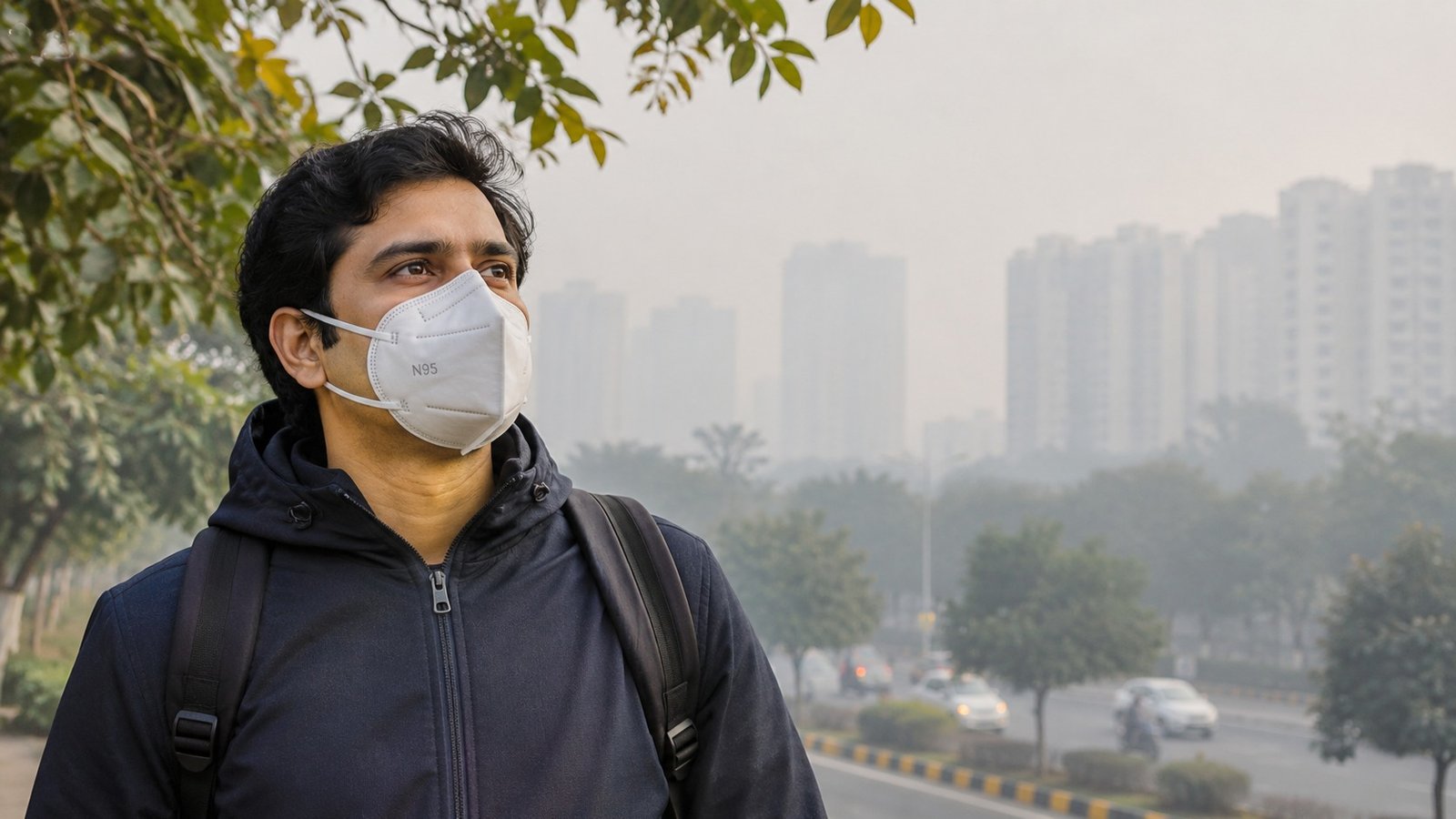
3. Use a well-fitting N95 or N99 respirator when exposure cannot be avoided
A genuine, properly fitted N95/N99 respirator can reduce inhalation of airborne particles. Fit is essential: gaps around the nose, cheeks or chin reduce protection. Cloth masks, scarves and loose-fitting masks are not equivalent to a well-fitted particulate respirator. Replace disposable respirators according to the manufacturer's instructions, and sooner if wet, dirty, damaged or difficult to breathe through.
A particulate respirator does not protect against every gaseous pollutant and should not be treated as complete protection. People who find respirators difficult to tolerate, including some people with significant heart or lung disease, should discuss practical options with their clinician.
4. Improve indoor air where possible
Keep windows and doors closed during periods when outdoor pollution is high, while maintaining safe ventilation when outdoor air improves. A correctly sized portable air cleaner with an effective particle filter, such as HEPA filtration, may reduce indoor particles in the room where it is used. Choose a unit appropriate for the room size and maintain or replace filters as instructed.
Avoid air-cleaning devices that intentionally generate ozone. An air purifier does not remove every gaseous pollutant, does not clean an entire neighbourhood and is not a substitute for reducing emissions.
5. Reduce indoor sources of smoke and particles
Avoid smoking, incense, dhoop, mosquito coils and indoor biomass or coal burning, particularly in poorly ventilated rooms. Use a kitchen exhaust that vents outdoors where feasible. Avoid adding indoor pollution while trying to reduce outdoor exposure.
6. Continue your prescribed medicines
People with asthma, COPD, hypertension, diabetes or cardiovascular disease should continue their prescribed treatment. If symptoms worsen, seek medical assessment rather than self-starting antibiotics, oral steroids or nebulised medicines.
Does an air purifier really help?
A portable air cleaner with an effective particle filter can reduce airborne particles in an appropriately sized indoor space. The real-world benefit depends on room size, clean-air delivery rate, filter condition, air leakage, placement and how the room is used. It will not make an entire home or neighbourhood pollution-free, and it may not remove gases unless it has suitable additional filtration.
WHO's review of personal interventions discusses respirators, indoor air cleaners and activity modification, while noting that these are less desirable than population-level emission reduction. Consider an air purifier as one part of an exposure-reduction plan, not as a guarantee of protection.
Can supplements, antioxidants or cough syrups protect your lungs from pollution?
There is no established supplement that reliably neutralises Delhi-NCR air pollution or makes heavily polluted air safe. Vitamins, herbal products, antioxidants and mucolytics should not be promoted as universal pollution-protection treatments.
Cough medicines do not treat the underlying exposure. Treatment depends on the cause of cough and whether asthma, COPD, infection or another diagnosis is present. Avoid unnecessary antibiotics and self-medication with oral steroids. Seek assessment for persistent cough, fever, wheezing, chest pain, breathlessness or blood in sputum.
When should you see a doctor?
Arrange a medical review if you develop persistent cough, new wheezing, worsening breathlessness, chest tightness, fever, reduced exercise tolerance or a clear increase in your usual asthma/COPD symptoms.
- Severe breathlessness, inability to speak full sentences, blue lips or marked drowsiness.
- Chest pain or pressure, especially with sweating, nausea, faintness or breathlessness.
- Sudden facial or arm weakness, speech difficulty, sudden visual loss or severe imbalance.
- Rapid deterioration despite following your prescribed asthma/COPD action plan.
Do not wait for the AQI to improve if serious symptoms are present.
Frequently asked questions
1. Can air pollution cause a cough even if I do not have asthma?
Yes. Pollutants can irritate the airways and contribute to cough in people without diagnosed asthma. Infection, allergy, reflux and other conditions can also cause cough. Persistent or worsening symptoms should be assessed.
2. Can pollution cause permanent lung damage?
Long-term exposure to air pollution is associated with chronic respiratory and cardiovascular disease. Risk depends on the pollutant mixture, concentration, duration of exposure and individual susceptibility. A brief exposure episode does not mean permanent damage has occurred in every person.
3. Is an N95 mask useful against PM2.5?
A genuine, well-fitting N95/N99 respirator can reduce inhalation of airborne particles, including PM2.5. Gaps reduce protection, and these respirators do not protect against every gaseous pollutant.
4. Should I stop walking or exercising during winter pollution?
Do not abandon physical activity altogether. On poor-air days, reduce strenuous outdoor exercise, avoid busy roads and shift activity indoors when air is cleaner. Follow personalised advice if you have heart or lung disease.
5. Can air pollution increase blood pressure?
Research links particulate exposure with cardiovascular effects, including changes in vascular function and blood pressure. Effects vary between individuals. Continue prescribed BP treatment and discuss persistently high readings with your clinician.
6. Does air pollution worsen diabetes?
Long-term exposure has been associated with metabolic effects and a higher population risk of type 2 diabetes. This does not prove pollution caused an individual's diabetes or that every short exposure raises glucose. Continue routine diabetes care.
7. Is steam inhalation useful for pollution-related cough?
Steam inhalation has not been shown to remove inhaled particles or reverse pollution-related lung injury. Hot-water steam can cause scald burns and should not replace medical assessment.
8. Should I use a nebuliser whenever I cough on a polluted day?
No. A nebuliser is a delivery device, not a treatment by itself. Bronchodilator or steroid nebulisation is appropriate only in selected clinical situations and should follow a clinician's plan.
9. Can an air purifier completely protect my family?
No. A correctly sized and maintained particle filter may reduce indoor particles in one room, but cannot eliminate all pollutants or outdoor exposure. Combine filtration, source control and sensible exposure reduction.
Final word
Air pollution in Delhi-NCR is a respiratory and cardiovascular health concern, not simply a seasonal inconvenience. People with asthma, COPD, heart disease, diabetes and other chronic conditions should reduce avoidable exposure, continue prescribed treatment and seek timely care when symptoms worsen. Individual precautions cannot replace cleaner-air policies and emission reduction.
References and further reading
- World Health Organization. Health effects of air pollution: evidence and implications – technical brief. 21 June 2026.
- World Health Organization. Air pollution: Personal interventions and risk communication. 4 October 2024.
- World Health Organization. Ambient (outdoor) air pollution and health.
- National Centre for Disease Control, Ministry of Health and Family Welfare, Government of India. Health Advisory on Air Pollution under NPCCHH. 2025.
- Commission for Air Quality Management. Delhi-NCR air-quality dashboard and public advisories.
- Press Information Bureau, Ministry of Environment, Forest and Climate Change. CAQM revokes GRAP III in Delhi-NCR, moves to GRAP II as AQI improves. 17 November 2026.
Medical disclaimer: This article is for general educational purposes and does not replace an individual medical consultation, diagnosis or treatment. AQI and public advisories can change; follow current official instructions and seek urgent care for emergency symptoms.